Selecting cabinet board materials directly affects overall cabinet performance. Therefore, proper cabinet substrate selection should be considered in advance when designing or renovating a kitchen. As two of the most‑widely‑used substrates for kitchen cabinets, particle board and plywood each feature distinct advantages and limitations for kitchens, an environment with high humidity and heavy wear‑and‑tear.
To pick the most suitable cabinet material, you may refer to the pros and cons of particle‑board versus plywood cabinets. Quotations generally show plywood carries a higher price tag than particle board. Many people assume higher price equals better performance, yet decisions should be based on actual project requirements. Particle board also delivers unique benefits, and material suitability matters most.
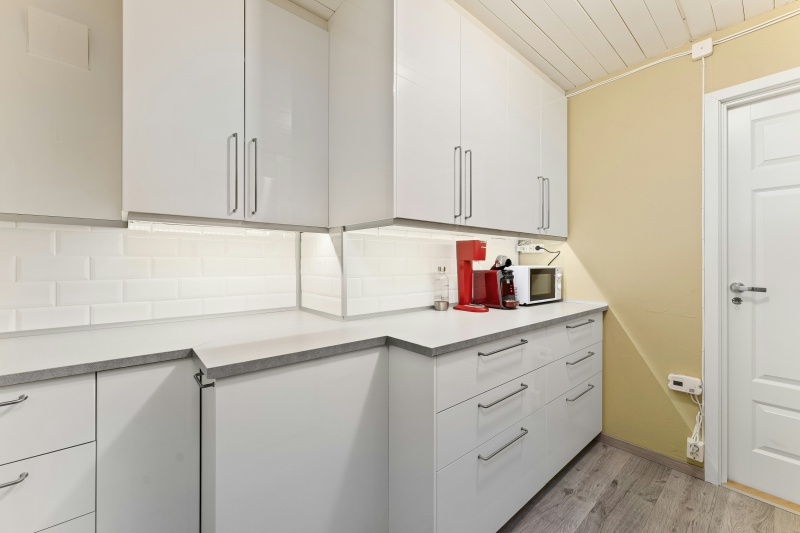
Construction of Particle Board and Plywood
To understand the pros and cons of particle‑board and plywood kitchen cabinets, start with their construction. Differences in manufacturing processes determine their physical and mechanical properties.
- Particle Board: Uniform Particle‑Based Core
Particle board is manufactured from wood fragments such as wood chips, shavings and wood flakes. These wood fragments are blended with synthetic resin adhesives and compressed under high temperature and high pressure.
Wood particles are evenly distributed throughout the panel, creating a dense, smooth core free of natural wood defects including knots, warping and inconsistent grain. It serves as an ideal substrate for melamine, thermofoil and other surface finishes.
- Plywood: Multi‑Layer Veneer Structure
Plywood is assembled by gluing thin wood veneers together, with grain directions of adjacent veneers oriented perpendicularly, typically using an odd number of layers. This cross‑grained construction counteracts wood expansion‑and‑contraction stress, which forms the foundation of its superior performance. Interlocking veneer layers resist warping, shrinking and swelling triggered by environmental changes while boosting panel strength and stability.
Plywood comes in multiple grades. Premium‑grade plywood features fewer voids, stronger adhesive bonds and more durable veneers.
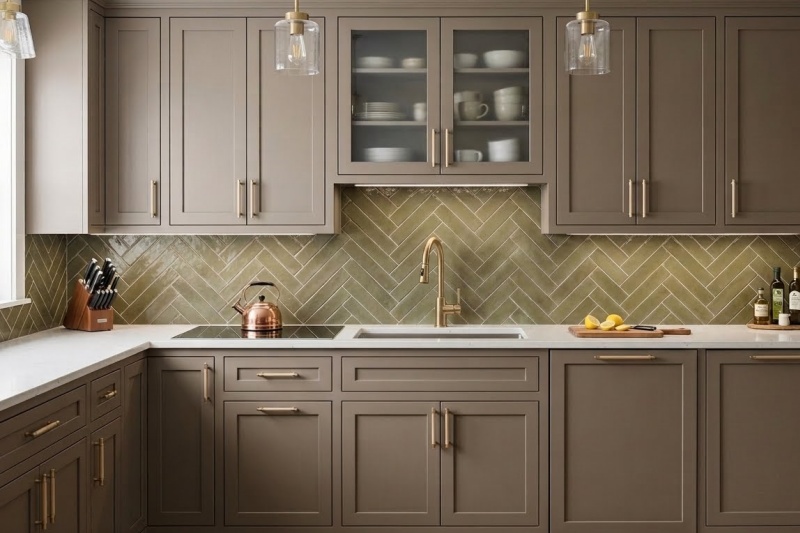
Pros and Cons of Particle‑Board Kitchen Cabinets
Particle‑board kitchen cabinets represent a cost‑effective solution and perform well in certain scenarios, yet they show noticeable weaknesses under harsh kitchen conditions, alongside unique benefits that plywood cannot match.
1. Advantages of Particle‑Board Cabinets
- High cost‑performance: Particle board costs substantially less than plywood, making it perfect for budget‑constrained renovation projects, rental properties and short‑term kitchen builds. Lower raw‑material and manufacturing costs keep overall cabinet expenses affordable.
- Smooth and uniform surface: Its homogeneous core delivers an exceptionally flat, smooth surface ideal for melamine or thermofoil lamination, achieving premium finish results for diverse interior‑design styles.
- Easy to process: Lighter‑weight than solid hardwood, particle board cuts cleanly and accepts lamination treatments effortlessly, well‑suited for mass production.
- Dimensional stability in dry conditions: In low‑humidity environments, particle board experiences minimal thermal expansion and contraction, maintaining flatness with little warping or shrinkage.
- Lightweight for easy installation: Lower panel weight reduces load on supporting walls and floors. It is easy to transport and assemble.
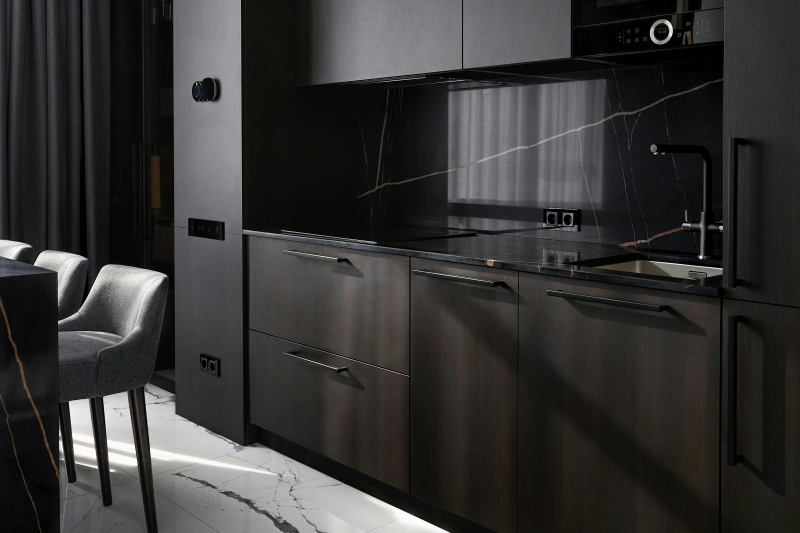
2. Disadvantages of Particle‑Board Cabinets
- Moderate moisture resistance: This is particle board’s most critical drawback for kitchens. Particle board absorbs moisture readily. Poor edge‑banding or prolonged exposure to dampness or water spills causes irreversible swelling, bulging and warping that can ruin panels. Rigorous edge‑sealing is mandatory.
- Limited load‑bearing capacity: Compared with plywood, particle board has lower compressive strength. Heavy cookware placed over long periods may lead to panel sagging or deformation, so it is not recommended for heavy‑duty zones.
- Screw‑holding power is average: Its granular inner structure cannot hold screws securely over extended time. Hinges and drawer slides tend to loosen after long‑term use, resulting in swinging doors and misaligned drawers that demand frequent maintenance.
- Limited shaping capability: Particle board only supports simple cutting. Complex carvings or curved profiles are not feasible; it is mostly applied for flat‑panel doors and cabinet boxes.
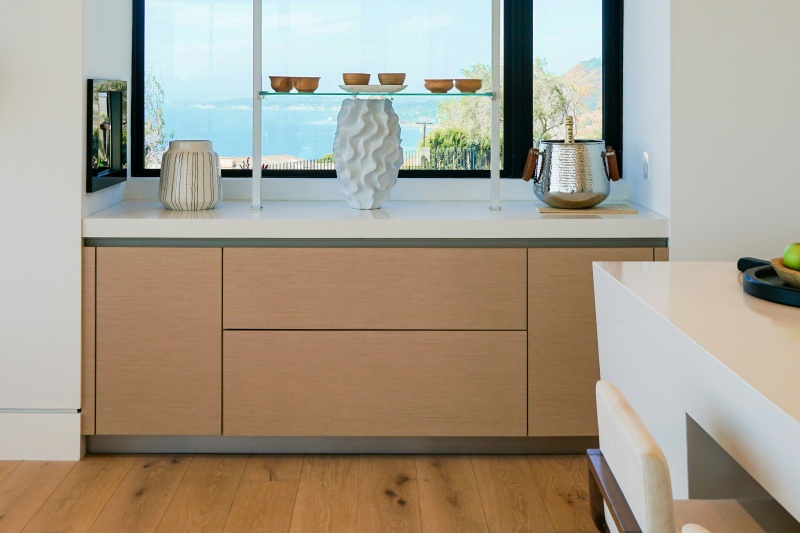
Pros and Cons of Plywood Kitchen Cabinets
Plywood is a high‑grade engineered wood with outstanding performance for kitchen environments, though it comes with higher upfront costs. Its structural design makes plywood the preferred substrate for contractors and designers building durable, high‑quality American‑standard kitchen cabinets.
1. Advantages of Plywood Cabinets
- Excellent moisture resistance: Its cross‑laminated structure delivers far better moisture resistance than particle board, featuring low water‑swell rates. It performs reliably in humid spaces such as kitchens and bathrooms, including areas around sinks, resisting kitchen moisture and steam.
- Superior load‑bearing capacity: Interlocking grain disperses weight evenly with balanced internal stress. It resists deformation and cracking under sustained heavy loads, supporting heavy countertops and large appliances, ideal for base cabinets and kitchen islands.
- Excellent screw‑holding power: Multi‑layer wood fibers grip screws firmly. Hinges and drawer slides stay secure with minimal maintenance, supporting frequent daily opening and closing of doors and drawers.
- High workability: Plywood accepts diverse finishing treatments including staining, painting, thermofoil lamination and veneer application. It adapts flexibly to modern, luxury‑minimalist, natural‑wood and other kitchen styles for custom builds.
2. Disadvantages of Plywood Cabinets
- High upfront cost: Raw‑material and production costs make plywood generally 20‑30 % more expensive than particle board or MDF, raising total kitchen‑renovation budgets and creating barriers for cost‑limited buyers.
- Fair surface uniformity: Even after sanding, plywood surfaces are not perfectly flat. Low‑grade plywood may contain voids or uneven veneers that compromise visual quality.
- Heavier weight: Plywood weighs more than particle board or MDF, increasing installation difficulty and placing higher demands on cabinet hardware and wall mounting structures. Robust installation support is required.
Performance Comparison Table: Particle Board vs Plywood
| Characteristic | Particle Board | Plywood | Winner |
| Moisture Resistance | Poor (prone to irreversible swelling damage) | Excellent (warp‑resistant, tolerates limited water contact) | Plywood |
| Structural Strength | Low (sags and cracks under heavy loads) | High (rigid, supports heavy weight without deformation) | Plywood |
| Screw‑Holding Power | Poor (hardware loosens over time, screw stripping risk) | Excellent (firm grip, low hardware‑maintenance demand) | Plywood |
| Service Life | 5‑15 years under heavy‑use conditions | 20+ years with proper care | Plywood |
| Cost | Low, high cost‑performance | High material cost | Particle Board |
| Surface Uniformity | Excellent (perfectly flat, no grain variation) | Fair (minor variations depending on grade) | Particle Board |
| Best‑Fit Application | Wall cabinets, dry zones, low‑budget renovations, short‑term rental housing | Base cabinets, high‑humidity zones, owner‑occupied long‑term homes, heavy‑use kitchens | Depends on application scenario |
How to Choose Between Particle‑Board and Plywood Kitchen Cabinets
Whether you select quality‑assured particle‑board kitchen cabinets or plywood cabinets depends on your budget, kitchen layout and long‑term usage goals. Recommendations for typical project scenarios are listed below.
Choose Particle Board if:
- You have a limited budget and need to control upfront expenditure.
- The kitchen serves as a rental property or for short‑term renovation (expected service life under 10 years).
- You are installing wall cabinets in dry, low‑humidity locations.
- You prioritize perfectly smooth, consistent cabinet‑door finish surfaces.
Choose Plywood if:
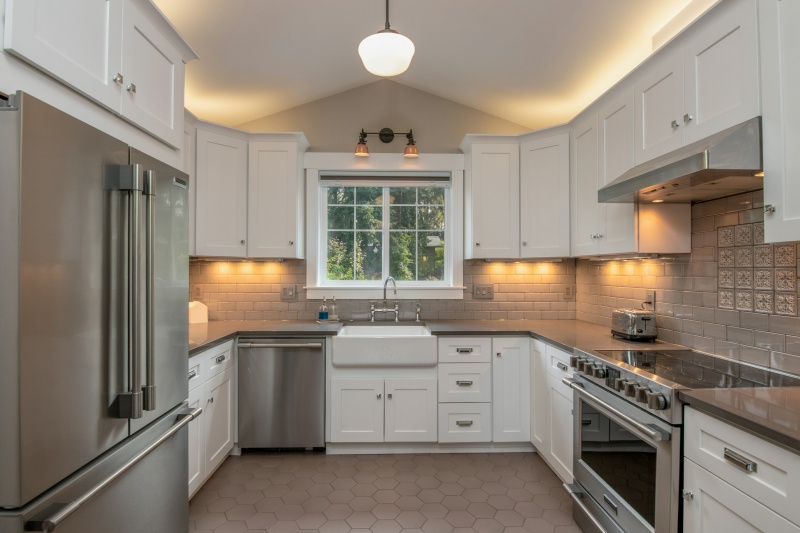
- You renovate an owner‑occupied home and prioritize long‑term durability, opt for full‑overlay shaker plywood‑framed kitchen cabinets.
- Your kitchen has high humidity, frequent liquid spills, or sits near sinks and dishwashers.
- You install base cabinets, kitchen islands, or cabinets supporting heavy countertops and large appliances.
- You want to cut down maintenance work and avoid frequent repairs to hardware and cabinet structures.
Summary
Both particle board and plywood represent viable kitchen‑cabinet solutions, yet they suit distinctly different use‑cases. Particle board offers a cost‑effective choice for low‑stress, dry‑location applications. Plywood is a long‑term‑investment material delivering superior performance under harsh kitchen conditions.
Understanding core composition, strengths and weaknesses of both substrates enables you to select material aligned with your requirements, budget and long‑term kitchen plans. For most homeowners prioritizing durability and service life, plywood is the more sensible option, especially for high‑use and high‑humidity zones. Particle board remains a practical alternative for budget‑restricted or short‑term projects.